 01
Harley & Indian Dyno Tuning
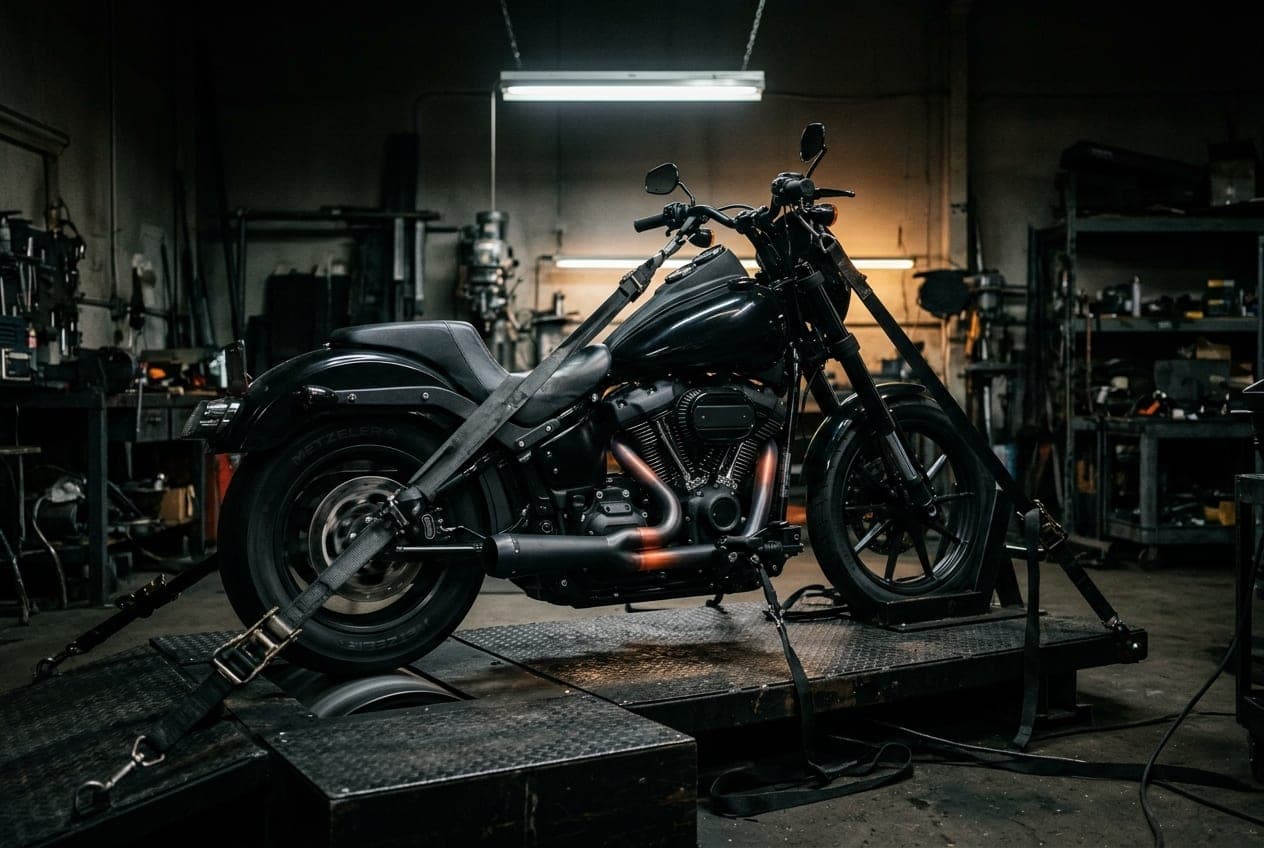
A big twin tune starts with heat and drivability. The horsepower comes after, and it comes with a printed sheet.
Details →Cruisers & Harleys · Carrollton, TX
Harley-Davidson, Indian and metric cruisers get their own section here because they are not sportbikes with more chrome. Air-cooled heat, lean factory maps, belt drive and a service schedule built around three fluids change how the work is done. The dyno, the data and the printed sheet stay the same.
What we do for big twins
01A big twin tune starts with heat and drivability. The horsepower comes after, and it comes with a printed sheet.
Details →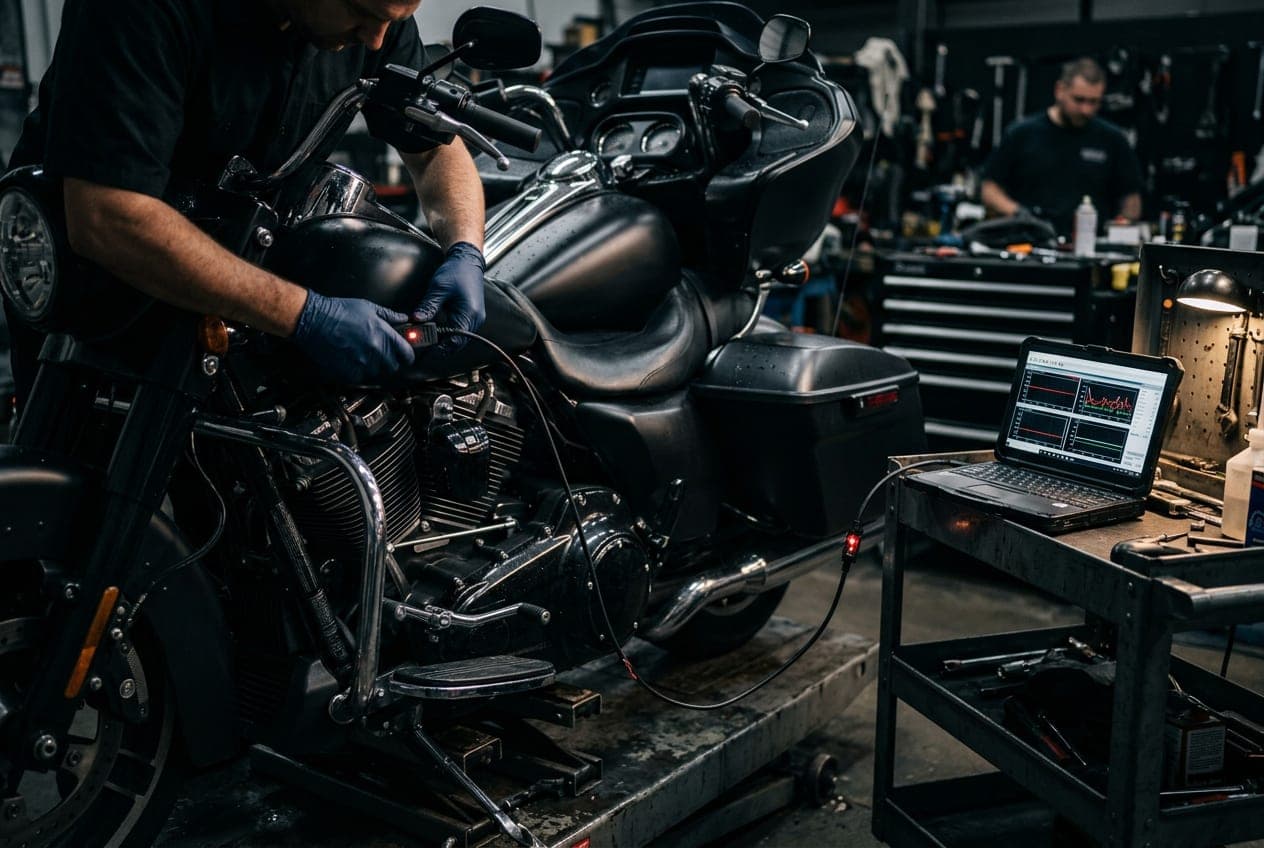 02
Flash the factory ECU or fit a tuner module. Either way the calibration is written for your parts and proven on the rollers.
Details → 03
Air cleaner and exhaust, then cams, then displacement, then heads. One rung at a time, each one tuned on the dyno.
Details →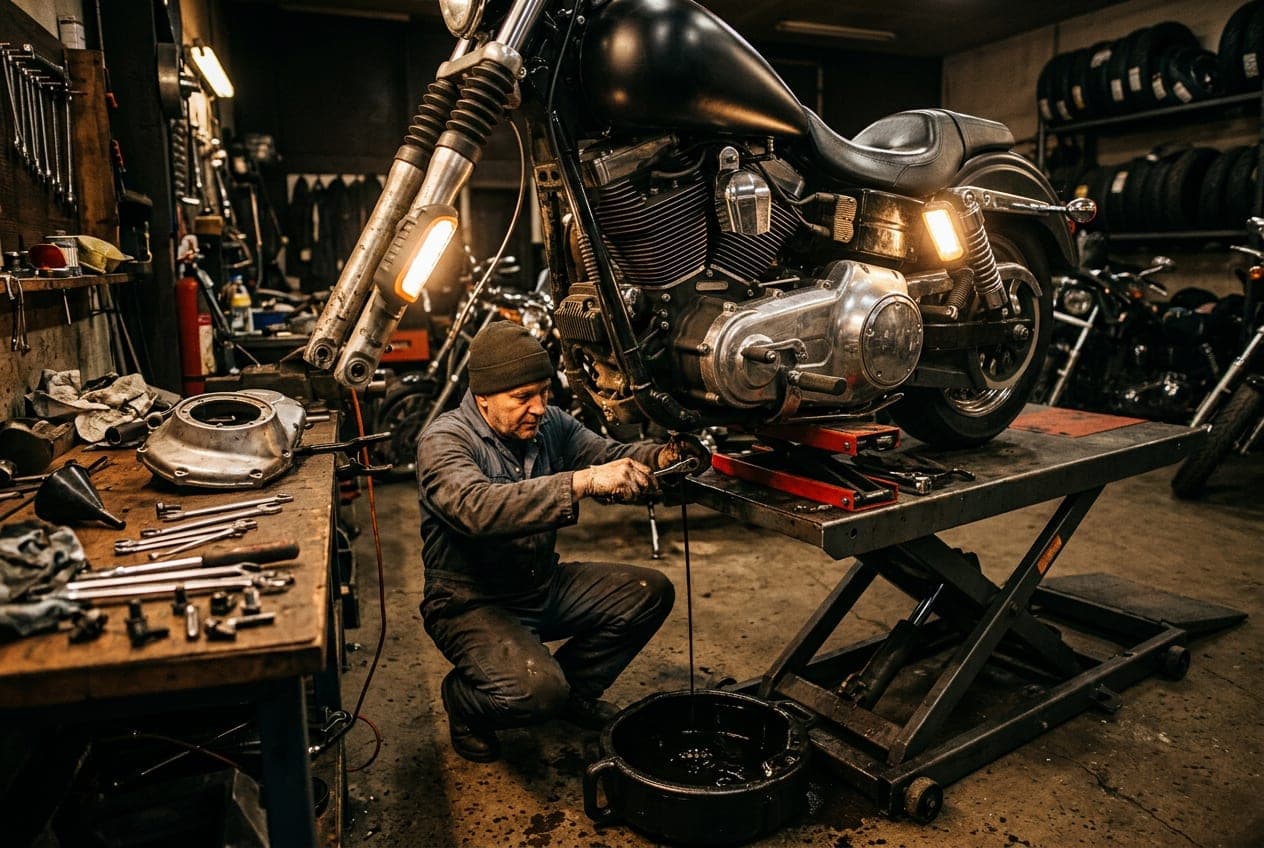 04
Three fluids, a belt, a schedule and a record for your file. The service your dealer does, without the dealer.
Details →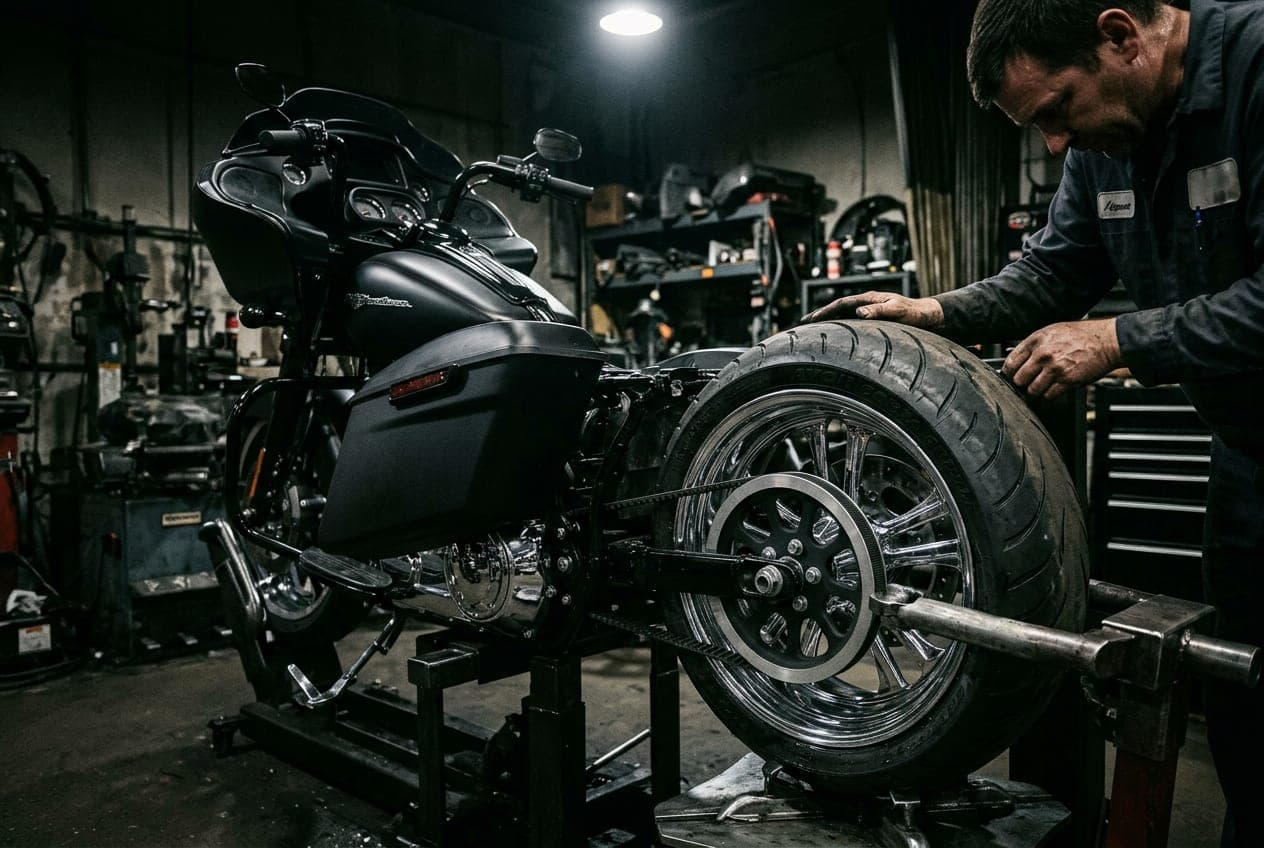 05
Wide rears, whitewalls, belts and brakes. The wear items a cruiser goes through, done right and torqued to spec.
Details → 06
A cruiser should fit the rider and hold the road. Shocks, forks, lowering and bars, set up for how and where you ride.
Details →Why cruisers get their own section
The stage path
High-flow air cleaner, a free-flowing exhaust or slip-ons, and a dyno tune to match. The biggest drivability change per dollar on a stock bike, and the step that fixes the heat.
A camshaft matched to the displacement and the way you ride: torque cams for touring, a bigger grind for a Softail that gets ridden hard. Installed with new lifters and pushrods where the platform needs them, then tuned.
Big bore kits take a 107 to a 114 or 117, a 114 to a 124 or 128, a 103 to a 107 or 110. Bored or sleeved cylinders, new pistons and rings, head work where it earns its keep.
Ported heads, higher compression, matched throttle body and injectors. A full-day dyno session with multiple maps for pump and race fuel when it applies.
Platforms
Crash and insurance repair for cruisers runs through the same process as the rest of the shop: insurance repair. Not sure where your bike fits? Call (972) 510-9915.
Cruiser services A to Z
Questions
All of them. Harley-Davidson is the bulk of the cruiser work, Indian Thunderstroke and PowerPlus come in regularly, and metric cruisers from Honda, Yamaha, Kawasaki, Suzuki and Triumph are welcome for service, tires and tuning.
Usually yes, for heat and drivability more than peak numbers. The factory map runs lean at idle and cruise; correcting it makes the bike cooler in traffic and smoother off idle. Add an air cleaner and exhaust and the gains get much bigger.
It depends on the model year, the ECU and whether you want to keep the bike reversible for a dealer. We will recommend the cleanest option for your bike and verify either one on the dyno.
Yes. Factory-schedule service with the correct fluids, the inspection items in the book and a record for your file. Ask your dealer how it treats warranty work done by an independent shop.
Yes. Custom baggers and lowered bikes need care on the dyno and on the lift, and that is part of the job. Tell us about the setup when you book.
Tell us the year, model and what is on the bike, and we'll tell you what it needs. Carrollton, TX, off I-35E at Whitlock Ln.